
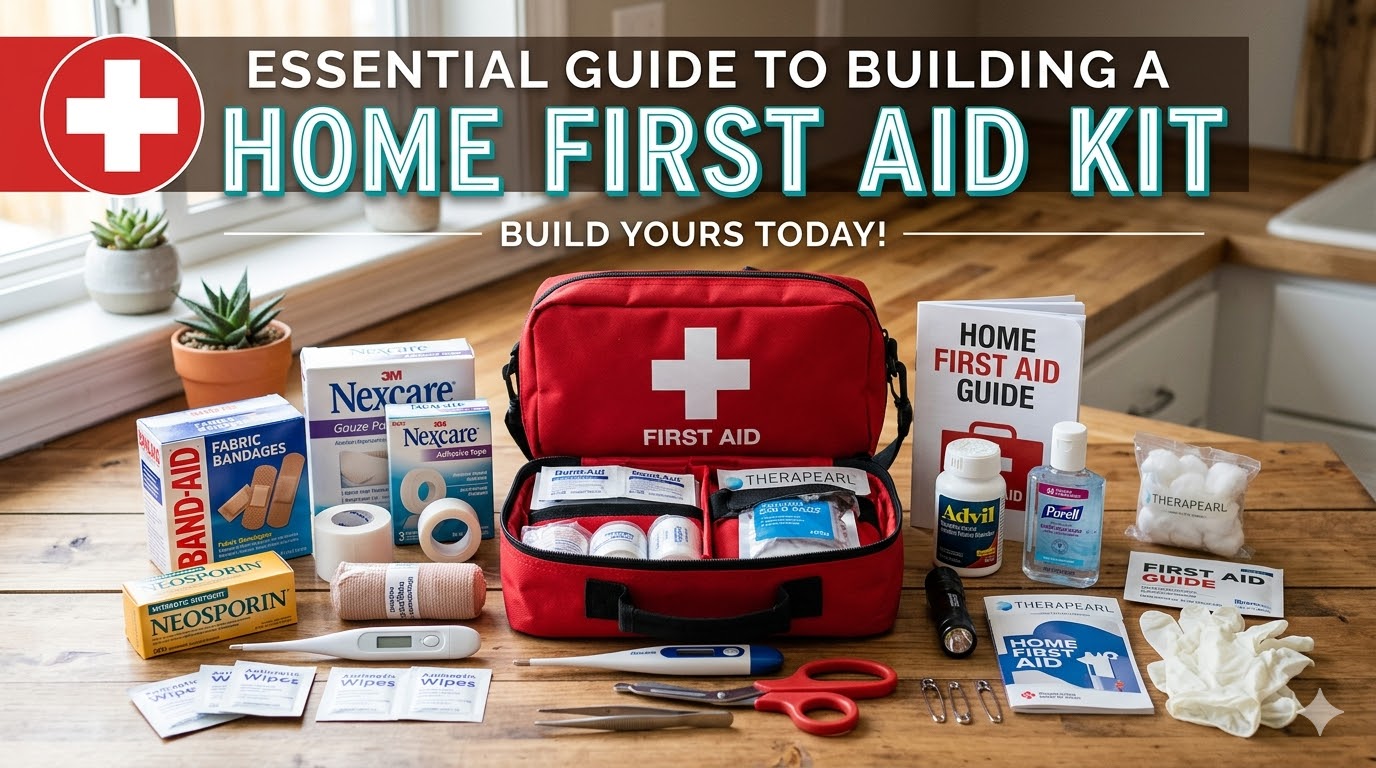
Essential Guide to Building a Home First Aid Kit
Complete Home First Aid Kit Guide
Every home should have a properly stocked first aid kit. Being prepared for minor injuries and emergencies can prevent complications and save lives. Learn exactly what to include and how to organize it.
Essential Medications to Include
- Paracetamol and Ibuprofen (pain and fever)
- Antacid tablets (indigestion)
- Anti-diarrhea medicine
- Antihistamine tablets (allergies)
- Antibiotic ointment (wound care)
- Hydrocortisone cream (skin irritation)
Wound Care Supplies
Proper wound care prevents infection and promotes healing:
- Sterile gauze pads (various sizes)
- Adhesive bandages (different sizes)
- Elastic bandages for sprains
- Medical tape
- Cotton wool and antiseptic wipes
- Tweezers (for splinter removal)
- Sterile saline solution
Essential Tools and Equipment
- Digital thermometer
- Blood pressure monitor (optional)
- Scissors (small, rounded tips)
- Forceps or tweezers
- Gloves (latex-free)
- CPR face shield
- Triangular bandage
Organization and Storage
Keep your first aid kit in a cool, dry place away from children. Use a clearly labeled, waterproof container. Organize items logically—medications together, wound supplies together. Check expiry dates quarterly and replenish supplies as needed.
Additional Items to Consider
- Eye wash solution
- Burn treatment gel
- Instant cold compress
- Pain relief patches
- Antibacterial soap
- Hand sanitizer
Important Documents
Include emergency contact numbers, family medical history, allergy information, and medication lists. Store a basic first aid instruction sheet in your kit.
Maintenance Tips
Check your first aid kit every six months. Replace used items immediately. Dispose of expired medicines properly. Update contact information as needed. Keep the kit easily accessible but secure from children.
When to Seek Professional Help
Some situations require professional medical attention:
- Severe bleeding that won't stop
- Signs of infection or poisoning
- Suspected fractures
- Loss of consciousness
- Difficulty breathing
Final Thoughts
A well-prepared first aid kit provides peace of mind and enables quick response to emergencies. Regular maintenance ensures effectiveness when needed. Combine your kit with basic first aid knowledge for optimal home safety.
