
Vitamin D Deficiency: Symptoms and Treatment
Understanding Vitamin D Deficiency
Vitamin D deficiency is increasingly common, especially in regions with limited sunlight. This essential nutrient affects bone health, immunity, and mental well-being. Understanding deficiency symptoms helps you seek timely treatment.
Why Vitamin D Matters
Vitamin D regulates calcium absorption for bone health, supports immune function, reduces inflammation, and influences mood regulation. Deficiency leads to multiple health issues that shouldn't be ignored.
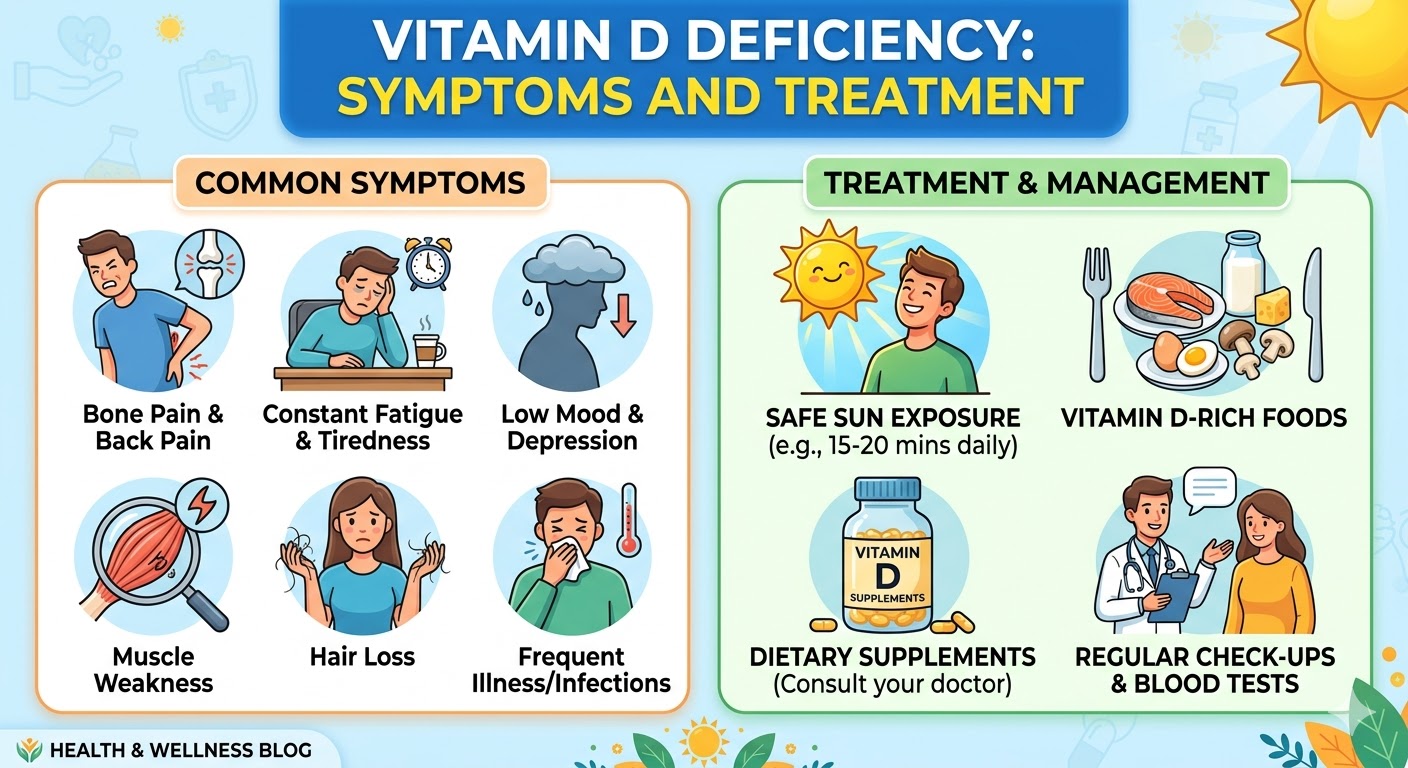
Symptoms of Vitamin D Deficiency
- Fatigue and weakness: Persistent tiredness despite adequate sleep
- Bone and muscle pain: Especially in legs, lower back, and ribs
- Mood changes: Depression, anxiety, or seasonal mood disorders
- Frequent infections: Weakened immunity
- Slow wound healing: Impaired recovery from injuries
- Hair loss: Unexpected hair shedding
Risk Factors
Certain groups are at higher risk:
- People with limited sun exposure
- Dark-skinned individuals in low-sunlight regions
- Elderly people with reduced skin synthesis
- Those with digestive disorders
- Vegan and vegetarian diets (limited food sources)
- People on certain medications
Diagnosis and Testing
Blood test is the only accurate way to determine vitamin D levels. The test measures 25-hydroxyvitamin D. Results are interpreted as:
- Below 20 ng/mL: Deficient
- 20-29 ng/mL: Insufficient
- 30-100 ng/mL: Adequate
- Above 100 ng/mL: Potentially toxic
Treatment Options
1. Sunlight Exposure
Get 10-30 minutes of midday sun several times weekly. Sun exposure naturally produces vitamin D in skin. However, sunscreen reduces production—balance sun safety with vitamin D synthesis.
2. Dietary Sources
- Fatty fish: Salmon, mackerel, sardines
- Egg yolks
- Mushrooms (especially when exposed to sunlight)
- Fortified milk and cereals
- Fortified plant-based milk alternatives
3. Vitamin D Supplements
Supplements effectively treat deficiency. Choose between:
- Vitamin D2 (Ergocalciferol): Plant-based, less effective
- Vitamin D3 (Cholecalciferol): More effective, animal-based
Typical doses range from 1000-4000 IU daily. Higher doses may be needed for severe deficiency—consult your doctor.
Additional Support
- Ensure adequate calcium intake
- Include magnesium-rich foods
- Regular exercise improves vitamin D effectiveness
- Monitor levels with periodic testing
Prevention Tips
- Maintain regular sun exposure safely
- Include vitamin D-rich foods in diet
- Consider supplements during winter months
- Test levels annually if at-risk
Final Thoughts
Vitamin D deficiency is treatable and preventable. If you experience symptoms, get tested and start treatment promptly. Combining sunlight, dietary sources, and supplements ensures optimal vitamin D levels for overall health.
