
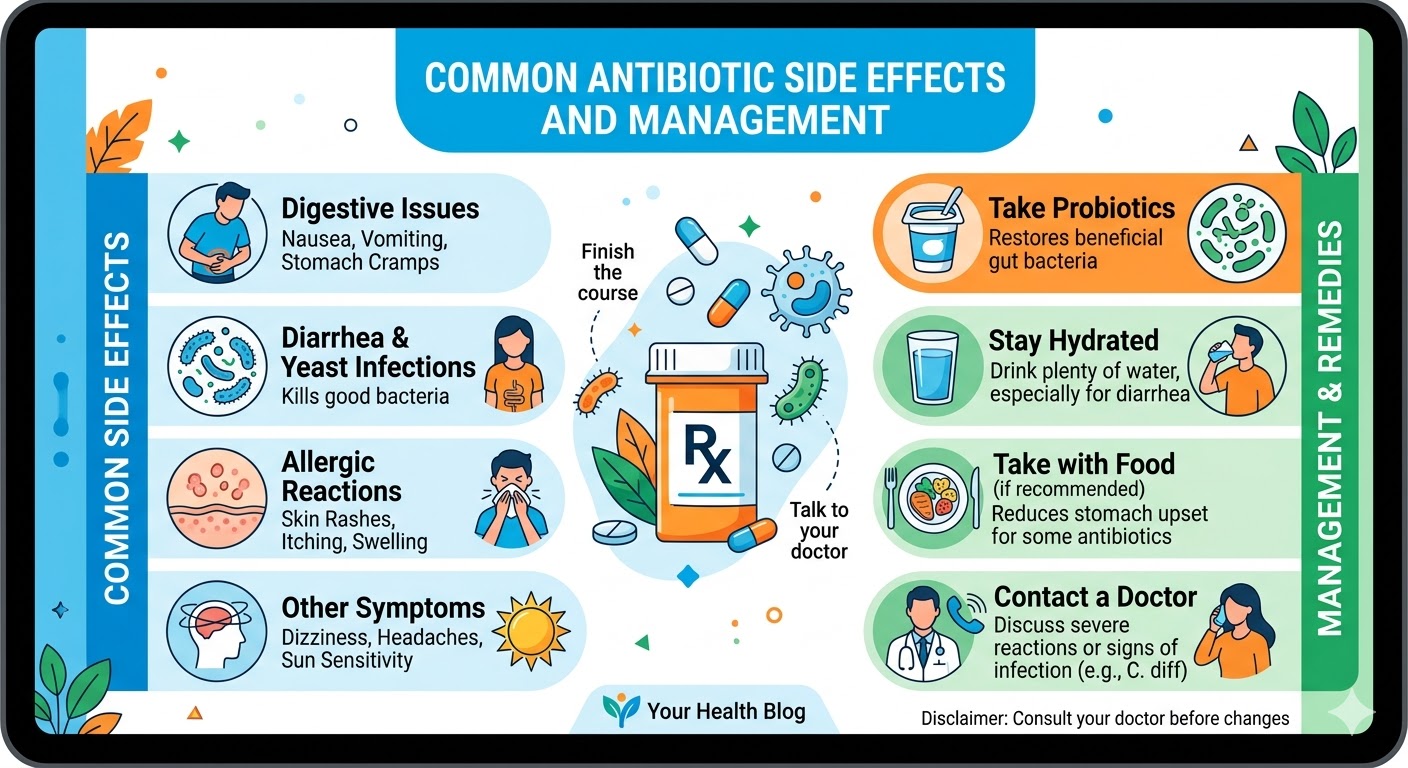
Common Antibiotic Side Effects and Management
Understanding Antibiotic Side Effects
Antibiotics are powerful medicines that fight bacterial infections, but they can cause side effects in some people. Knowing what to expect helps you manage reactions effectively.
Most Common Side Effects
The following side effects occur frequently but are usually mild:
- Nausea and vomiting: Take medicine with food if tolerated
- Diarrhea: Stay hydrated; consult doctor if severe
- Stomach pain: Take with milk or food
- Headache: Use pain relievers if approved by doctor
Allergic Reactions
Some people are allergic to antibiotics, especially penicillin-based ones. Seek immediate medical help if you experience:
- Rash or hives
- Difficulty breathing or swelling of lips/throat
- Severe itching
- Anaphylaxis symptoms
Managing Common Side Effects
For Nausea: Eat small, frequent meals. Take medicine with food unless instructed otherwise. Avoid spicy or fatty foods.
For Diarrhea: Drink plenty of water and electrolyte solutions. Eat bland, easy-to-digest foods. Don't use anti-diarrhea medicines without doctor approval.
For Stomach Upset: Take probiotics to support gut health. Include yogurt or fermented foods in your diet.
Less Common but Important Side Effects
- Sensitivity to sunlight (certain antibiotics)
- Yeast infections (from disrupted gut bacteria)
- Liver or kidney issues (rare)
- Severe skin reactions
Prevention Tips
Minimize side effects by following dosage instructions exactly. Finish the complete course even if you feel better. Inform your doctor about previous antibiotic reactions. Take probiotics alongside antibiotics if recommended.
When to Contact Your Doctor
Stop medicine and seek help immediately if you experience:
- Severe allergic reactions
- Persistent diarrhea or vomiting
- Unusual bruising or bleeding
- Severe rash or skin reactions
Final Thoughts
Most antibiotic side effects are manageable with simple measures. Never stop antibiotics without medical advice, as this can lead to antibiotic resistance. Proper communication with your healthcare provider ensures safe and effective treatment.
Related Articles
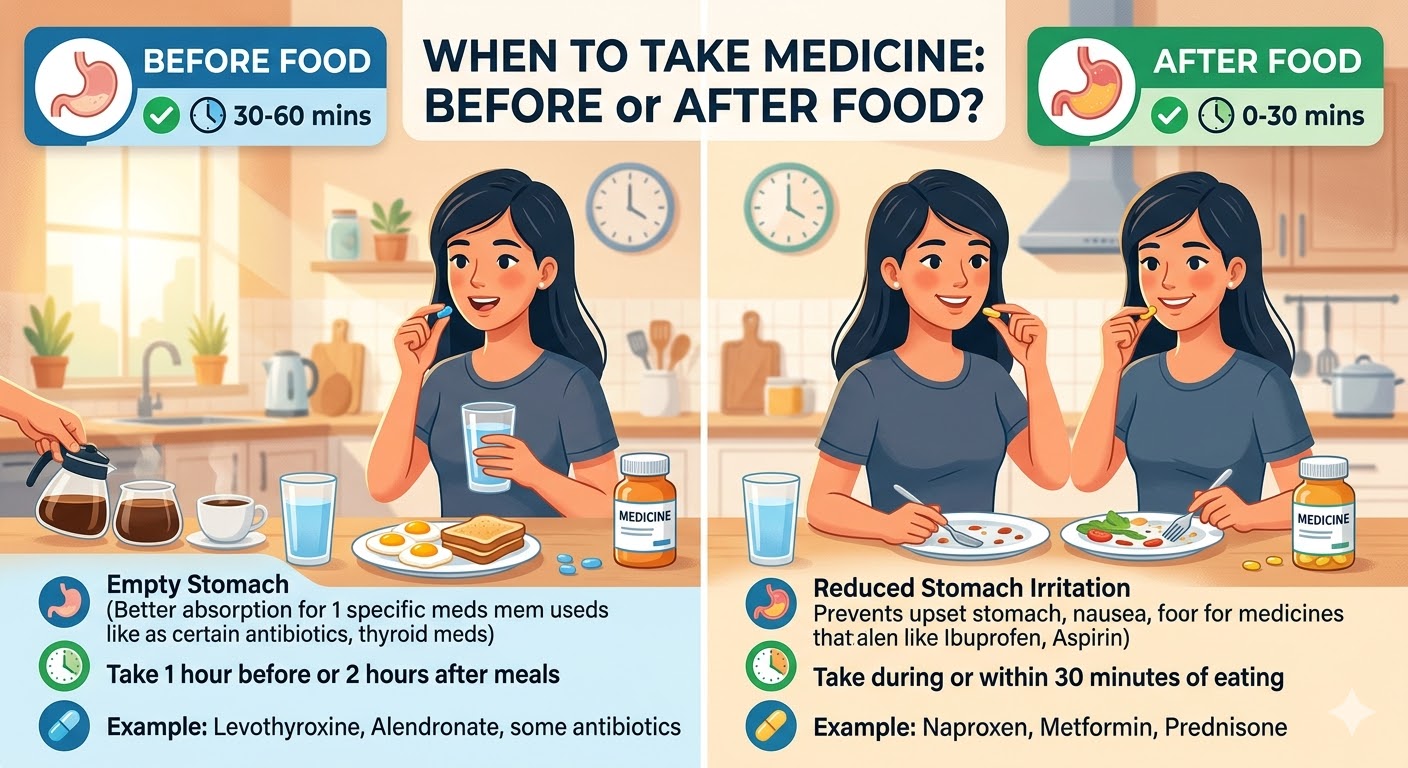
When to Take Medicine: Before or After Food?
Discover whether to take your medicines before or after meals. Understand how food affects medicine absorption and get expert guidance for different medication types.

Managing Diabetes: Medications and Lifestyle Tips
Effective diabetes management combines proper medications with lifestyle changes. Learn about diabetes drugs, medication schedules, and daily management strategies.
