
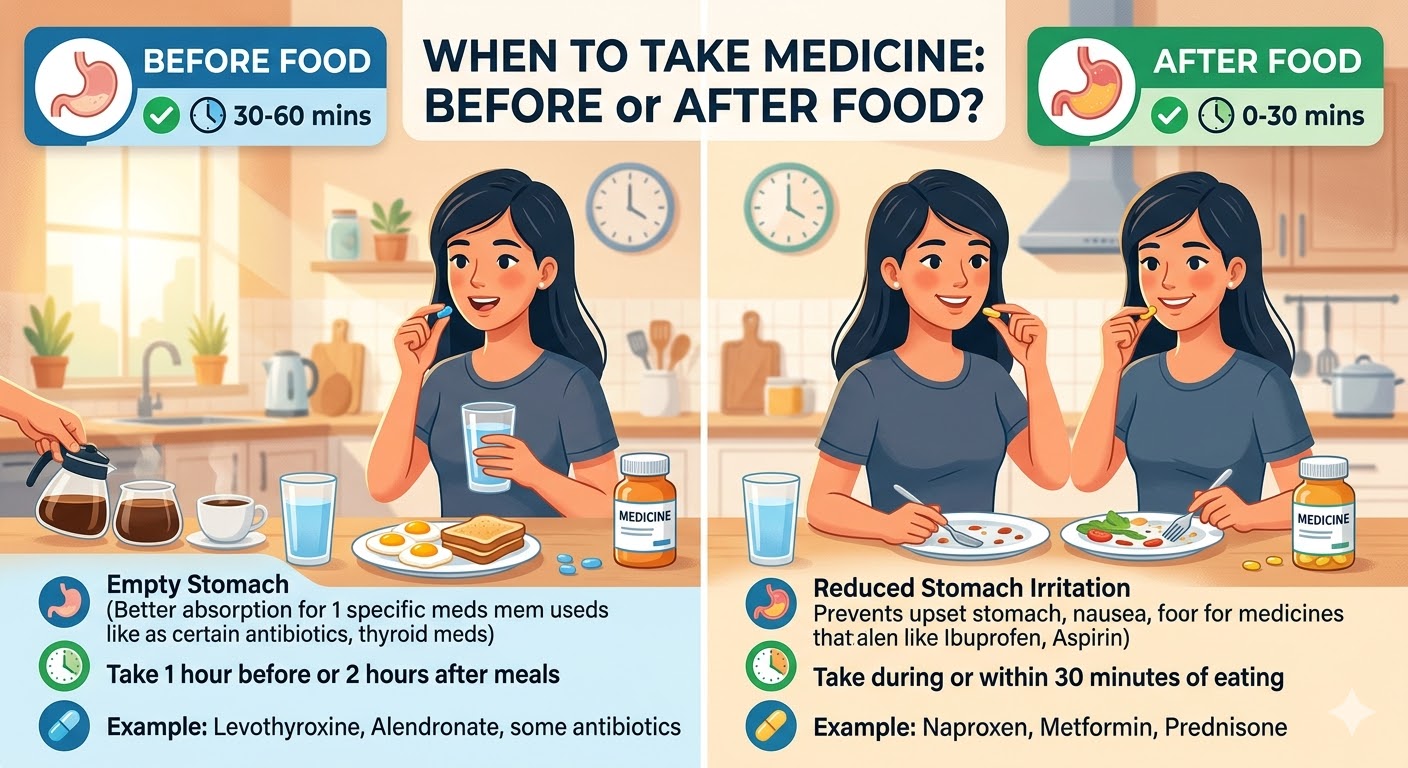
When to Take Medicine: Before or After Food?
Medicine Timing with Food: What You Need to Know
The timing of medicine intake relative to meals significantly impacts its effectiveness. Taking medication at the right time ensures maximum benefits and minimizes side effects.
Why Food Matters
Food affects medicine absorption in various ways. Some medicines are absorbed better on an empty stomach, while others require food for optimal absorption. The stomach's pH, food composition, and medicine type all play crucial roles.
Medicines to Take on Empty Stomach
These medicines work best 1 hour before or 2 hours after meals:
- Antibiotics like Tetracyclines and Fluoroquinolones
- Bisphosphonates (bone health medicines)
- Iron supplements
- Certain antifungal medications
Why? Food can reduce their absorption, making them less effective.
Medicines to Take with Food
These medicines should be taken during or immediately after meals:
- NSAIDs (Ibuprofen, Naproxen) - prevent stomach irritation
- Statins for cholesterol
- Some blood pressure medications
- Fat-soluble vitamins (A, D, E, K)
Benefit: Food reduces stomach irritation and improves absorption of certain medicines.
Medicines with No Food Restrictions
Many common medicines can be taken with or without food. These include paracetamol, most antihistamines, and many antibiotics. Check your medicine label for specific instructions.
Important Considerations
Always follow your doctor's or pharmacist's instructions. If unsure, ask before taking medicine. Never assume timing based on other medicines. Different formulations of the same medicine may have different requirements.
Practical Tips
- Read medicine labels carefully for timing instructions
- Set reminders on your phone for medicine times
- Keep a medicine diary to track intake
- Inform your doctor about meal timings
When in Doubt
If unclear about medicine timing, contact your pharmacist immediately. Incorrect timing can reduce effectiveness or increase side effects. Proper medicine timing is essential for treatment success.
Related Articles
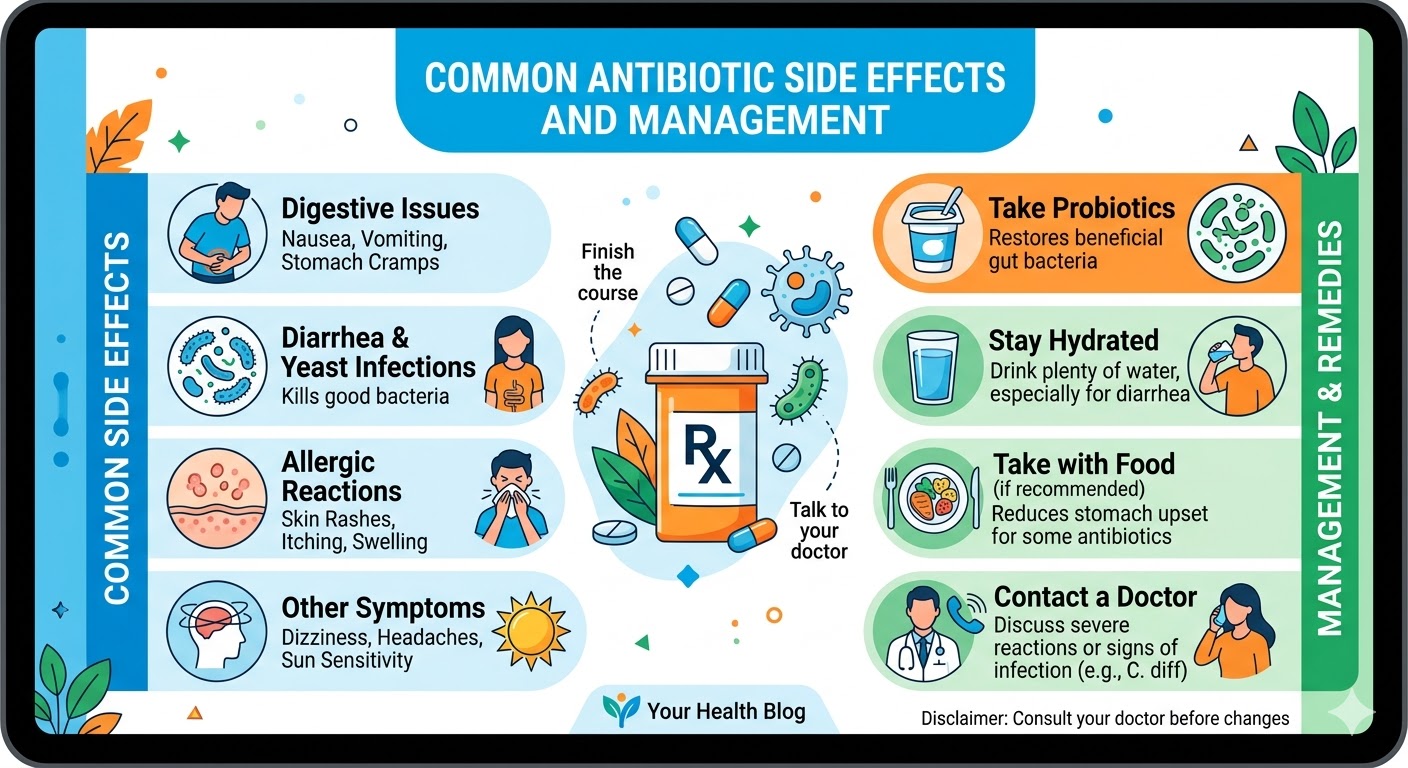
Common Antibiotic Side Effects and Management
Antibiotics save lives but can cause side effects. Learn about common reactions, how to manage them, and when to contact your doctor for proper guidance.

Managing Diabetes: Medications and Lifestyle Tips
Effective diabetes management combines proper medications with lifestyle changes. Learn about diabetes drugs, medication schedules, and daily management strategies.
